

A feed pellet mill is a machine used for the production of feed, which usually has a feeder for the input of raw material crushing size, a conditioner for adjusting the treatment of raw material and controlling the dehydration, a pelleting bin for the preparation of feed pellets, a drive shaft responsible for the provision of power, and a corresponding control and monitoring system, etc. Among them, the feeder is one of the core components of the feed pellet mill. It mainly consists of a winch shaft, a stainless steel cylinder, a speed reducer and a speed-regulating motor. Through the concerted work of these components, the raw materials can be evenly fed into the conditioner.
The conditioner is another important component, which is composed of conditioning shaft, paddle, simple body, reducer and motor. Here, the raw materials are subjected to conditioning treatment, including moisture control and temperature control, to ensure the quality and yield of the feed pellets.
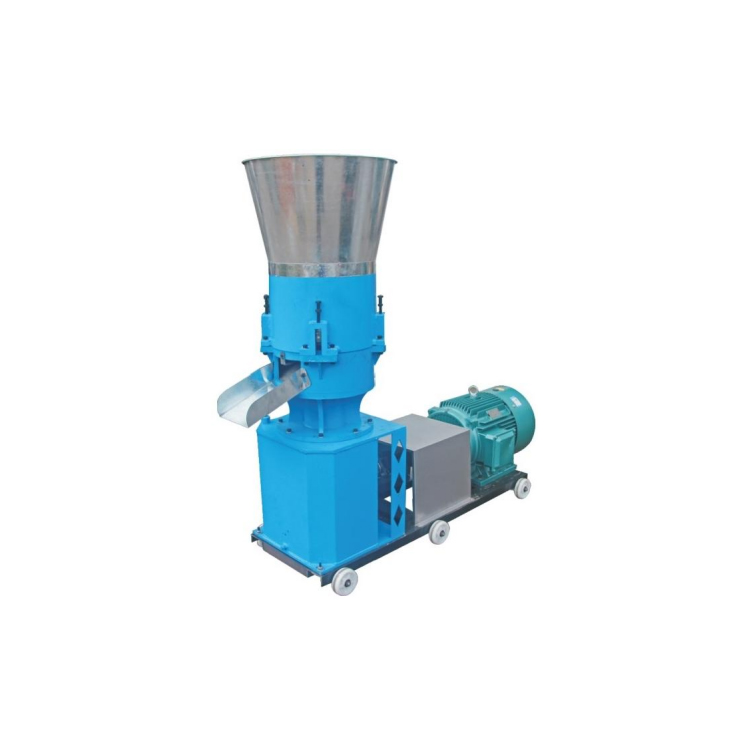
Pelleting bin is one of the core parts of the feed pellet mill, which is mainly composed of ring mould, two pressure rollers, feeding scraper, slicing and mould roller gap adjustment screw. Here, the raw materials will be made into granules, and the granules will be sent out evenly by the action of feeding scraper and slicing.
The transmission shaft is the power source of the feed pellet mill, which consists of active gear, passive gear, main shaft, empty shaft as well as box and bearing. Through the rotation of the transmission shaft, the power can be transferred to various components, thus realising the preparation of feed pellets.
In addition, the feed pellet mill includes control and monitoring systems for controlling the process of preparing the feed pellets and monitoring their quality and yield. These systems typically include control panels, sensors, controllers, and monitors.
Overall, feed pellet mills are complex machines whose main components include feeders, conditioners, pellet making bins, drive shafts, and control and monitoring systems. These components work in tandem to enable the preparation of feed pellets and ensure their quality and yield.